
Madama Butterfly
Giacomo Puccini's 1904 opera exploring the exotic music of Japan. The libretto is by Luigi Illica and Guiseppe Giacosa who based their work on a French novel, "Madame Chrysanthème" by Pierre Loti.
From Butterfly's point of view the story is about honor, self-deception, and redemption of honor. From Pinkerton's point of view it was about fun, irresponsibility and coming to grips with the consequences of one's actions.
Butterfly's father died through ritual suicide and her family is without adequate means. She is embarking on the role of geisha, a not dishonorable profession, but a step down from the life as a daughter of a samurai that she had known. Her one posession of her father's is the tanto knife with which he performed seppuku. This ritualized suicide is meant to atone for a transgression and thus retore honnor to the family.
We meet Butterfly after she has met Pinkerton and has been caught up in a whirlwind romance. She approaches the relationship with the utmost seriousness, whereas he sees it as a temporary situation -- to last only the duration of his shore leave. They marry against the objections of the family priest (The Boze). He asserts that she is offending her ancestors by abandoning Bhuddism in favor of Christianity. But she is determined to become a "real" American wife. Unlike Pinkerton, she intends to observe her marital vows. Eventually, the shore leave ends and Pinkerton returns to sea. He tells her he will return when the robins do. But Butterfly waits three years for Pinkerton's white ship to return to Nagasaki harbor.
In the intervening three years, the funds he left behind have run out and Suzuki, her servant, notes their dire situation and proposes alternatives for Butterfly to consider. In her final aria, "Un bel di vedremo" (A better day will come) Butterfly refuses to hear any dissent from her own conviction that Pinkerton will return for her.
He does return. We witness this as Butterfly is standing, peering through a peephole in the wall facing the harbor. Puccini wrote a 12-minute orchestration to emulate Butterfly's overnight vigil at that peephole though it is often suppressed in modern performances. Regardless, the drama is there for us to agonize with Butterfly. Finally, she sees the ship's smoke as it re-enters Nagasaki harbor. Suzuki busies herself to accompany Butterfly to the docks, but Butterfly asserts her dignity by holding her ground to wait for Pinkerton to come to her.
The American consul who advised Pinkerton at the beginning of the marriage, comes ahead to inform Butterfly of Pinkerton's situation and intent. Butterfly doesn't quite take in that Pinkerton has an American wife in tow. But she does understand that he want to take her son, Trouble, back to America with him. She agrees to this on the condition that he come himself to so request.
In the final moments of the opera, Butterfly sees the new wife, Kate, and makes her final preparations. She sends Suzuki out to greet Pinkerton and Kate while she herself retrieves her father's tanto blade. As the music swells to a powerful crescendo, Butterfly drops the knife into her chest and abdomen. Pinkerton had been calling out "Butterfly" and when he gets no response he senses tragedy and runs into the house to find Butterfly collapsed on the floor.
Thus Butterfly restores the honor lost by having started out on her journey with Pinkerton against the advice of her family. For me, the point of no return for Butterfly comes at the beginning of the wedding ceremonty when she commands the wedding guests to bow "e tutti giù" before Pinkerton and Sharpess (the American consul). The tragedy is, of course, Butterfly's sacrifice to Pinkerton's primal urges and cultural insensitivity. The irony, is that Butterfly lived her adopted Christian values more faithfully than did Pinkerton.
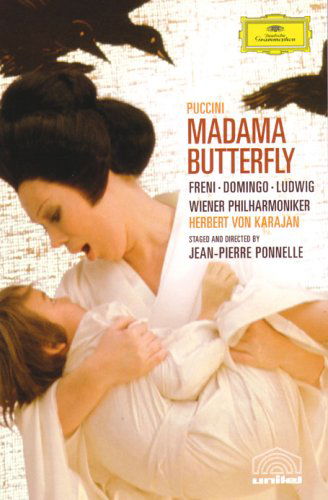
Giacomo Puccini's tragic opera of a misbegotten love affair between Cio-cio-san and US Naval Lieutenant B.F. Pinkerton. We will present a Vienna State Opera production from 1974 with a collaboration of great artists:
| ◇ Conductor: | Herbert von Karajan |
| ◇ B.F. Pinkerton: | Placido Domingo |
| ◇ Cio-cio-san: | Mirella Freni |
| ◇ Suzuki: | Christa Ludwig |
Runtime is 145 minutes. Sung in Italian with English sub-titles.
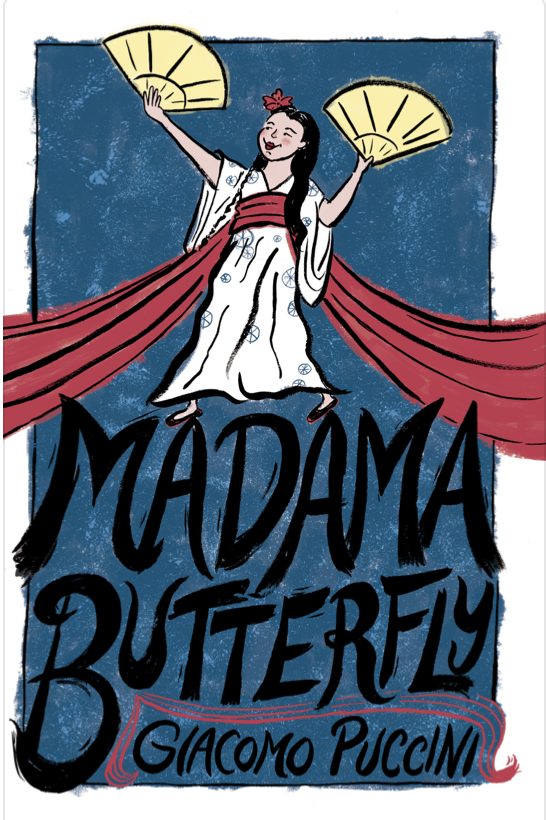
Casual, comic-book style English language synopsis for Madama Butterfly.
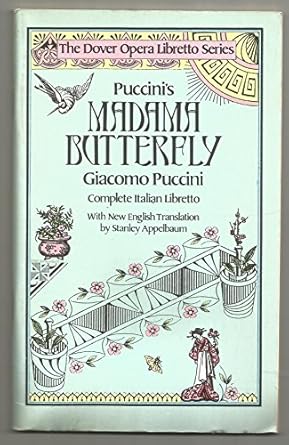
Italian - English synopsis for Madama Butterfly. A side-by-side libretto is a useful tool to assist with language acquisition.
Asmik Grigorian
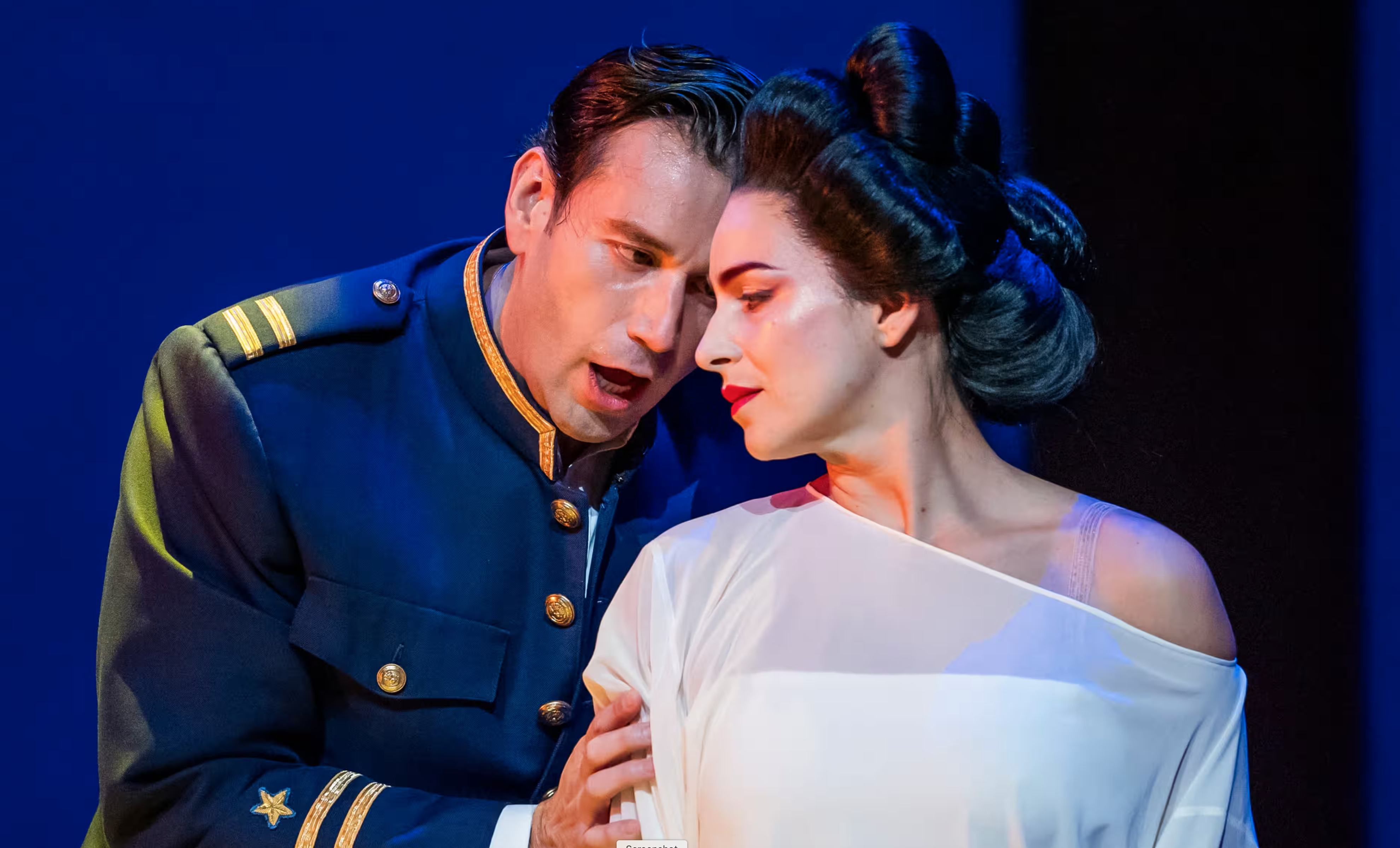
Asmik Grigoran singing "Vogliatemi bene" with Jusha Guerrero at the Royal Opera.
Asmik Grigorian
Asmik Grigoran singing "Un bel di vedremo" on the Met stage in 2024.
James Conlon Pre-Opera Lecture
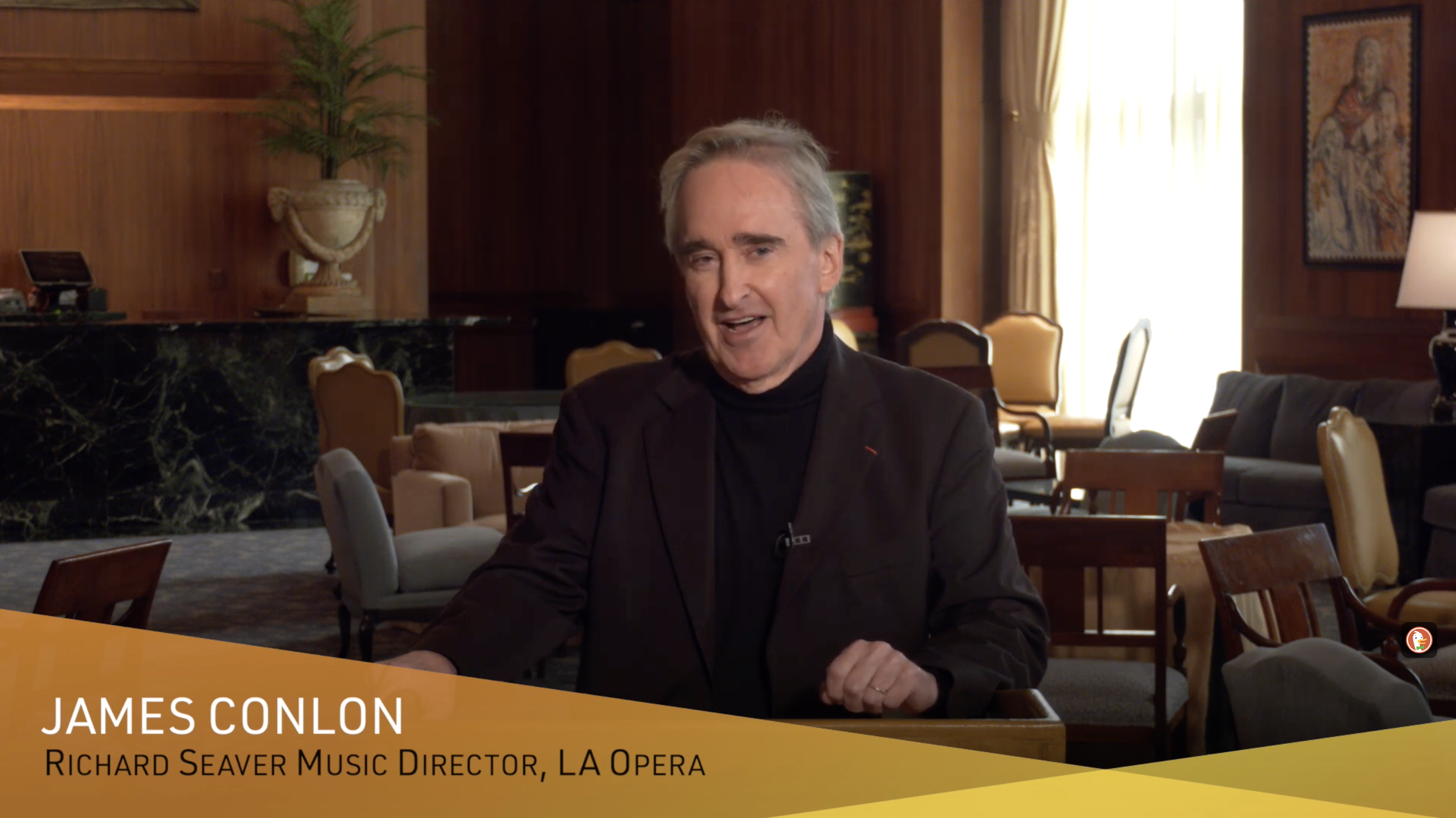
Very informative lecture from Maestro James Conlon (Musical director of Los Angeles Opera).