
Tales of Hoffmann
The Tales of Hoffmann is a widely beloved opera. It was Jacques Offenbach's final opera. Offenbach died before the premiere in Paris in 1881. The text is composed of three short stories written by the real-life ETA Hoffmann. The stories are each about a failed love:
- Olympia - an automaton that Hoffmann mistakes for a real woman.
- Guilietta - a Venetian courtesan
- Antonia - an opera singer suffering from a fatal illness
The opera begins with a prologue that describes that a famous soprano, Stella, is performing in Mozart's "Don Giovanni". Tickets were hard to come by and many opera goers could not get in. Hoffmann is one of the unfortunate and decides to visit the bar next door to drink his dissappointment away. He is joined by local students who have come to hear his stories. He begins with the story of Kleinzach, a deformed and grotesque charachter (in real life, Offenbach's Borzoi pet dog was named Kleinzach).
ETA Hoffmann was a Renaissance man as well as a rogue. He died of syphillis at the age of 46. Hoffmann wrote short stories, novels, music, opera and is tied to the emergence of science fiction. Among his stories are the three that make up Tales of Hoffman and The Nutcracker and the Mouse King. His character, Dr. Coppelius, comes from his short story, "Der Sandman." who appears both in Tales of Hoffman as the maker of the automaton, Olympia, and as the creator of the ballerina in Delibes ballet, Coppelia. "Der Sandman" was the analyzed by Sigmund Freud in a 1919 essay titled, "The Uncanny".
We will present a film version of Tales of Hoffmann by the Archers (Michael Powell & Emeric Pressburger). This 1951 film fits well within the golden era of the Broadway musical. This production was a reward project from the Rank Organisation for Powell & Pressburger's great success with The Red Shoes. But, Arthur Rank hated it and tried to quash it. Despite Rank's opinion, celebrated film directors loved it, including Cecile B. DeMille, George Romero and Martin Scorcese. Full disclosure, the Powell/Pressburger version may vary from opera house versions you may have seen before. It is a well established fact that there is no definitive version of this work. One reason is that Offenbach died four years before the premiere, and early in its production run a fire destroyed the opera house and all of the scores. Thus, the work has been re-interpreted from the very beginning.
The film version of Tales of Hoffmann was a critical success. Hein Heckroth won two 1952 Academy Awards, one for artistic direction and another for set design. The soundtrack was recorded entirely in advance with the opera conducted by Sir Thomas Beecham using then currently performing opera singers. Beecham was considered a ballet friendly conductor, and all of the dance scenes were set to the pre-recorded soundtrack. The cast also included real ballet dancers -- Moira Shearer and Ludmilla Tcherina -- who also appeared in The Red Shoes. It is fair to label this film version of Tales of Hoffman "high art". Heckroth and the Archers collaborated with Picasso, Matisse and other artists in the artistic stylings. Those influences have led to artistic decisions that may clash with traditional operatic sensibilities. But what is also certain is that this film greatly influenced fine arts culture and film-making in particular for decades following.
Please bring an open mind and enjoy a different version of an opera you have likely seen before and a great film you may not have yet experienced.
Lecture
12-minute long informative pre-opera lecture.
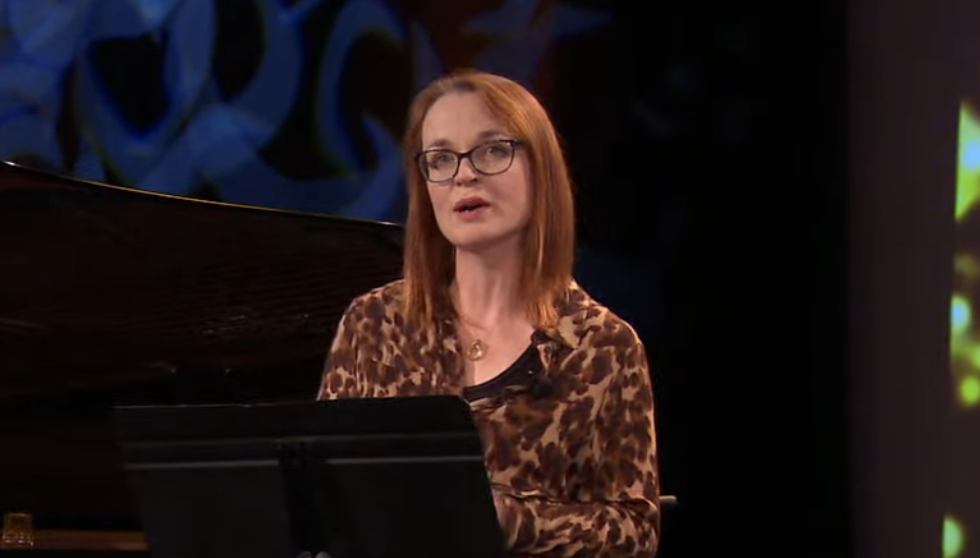
Royal Opera lecture component discussing the life of ETA Hoffmann. Dr Joanna Neilly of Oxford University shares the literary and cultural impact of ETA Hoffmann on Western arts and culture. In addition to Dr. Neilly's lecture, Hoffmann was born Ernst Theodor Wilhelm Hoffmann. When he was 33 he published "Ritter Gluck" and began referring to himself as ETA, the "A" standing for "Amadeus" in homage to Mozart. Despite being known as ETA Hoffmann, he legally remained ETW throughout his life.
A great director's homage to a great cinema/opera/ballet achievement.
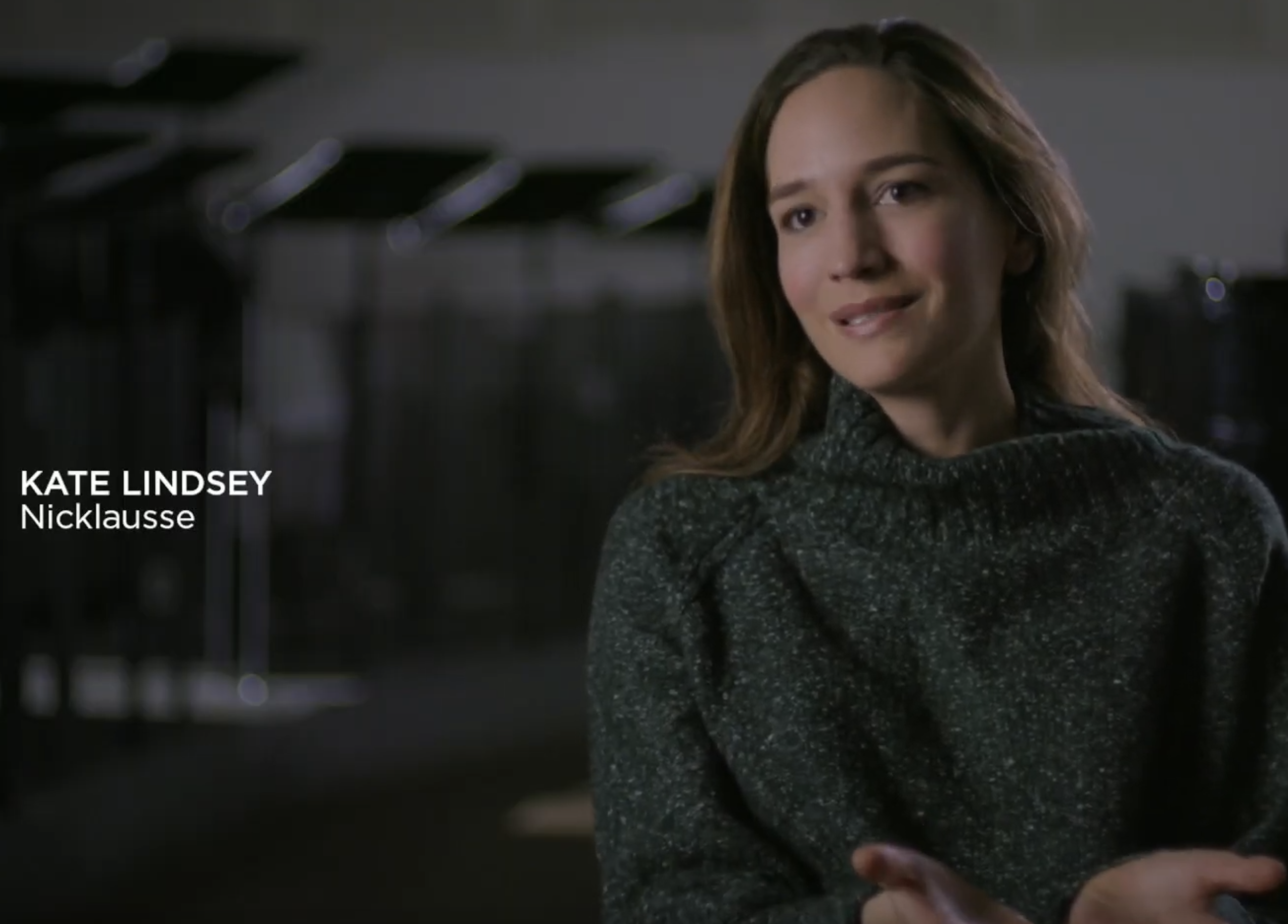
Royal Opera preview as told by the performers.
Synopsis
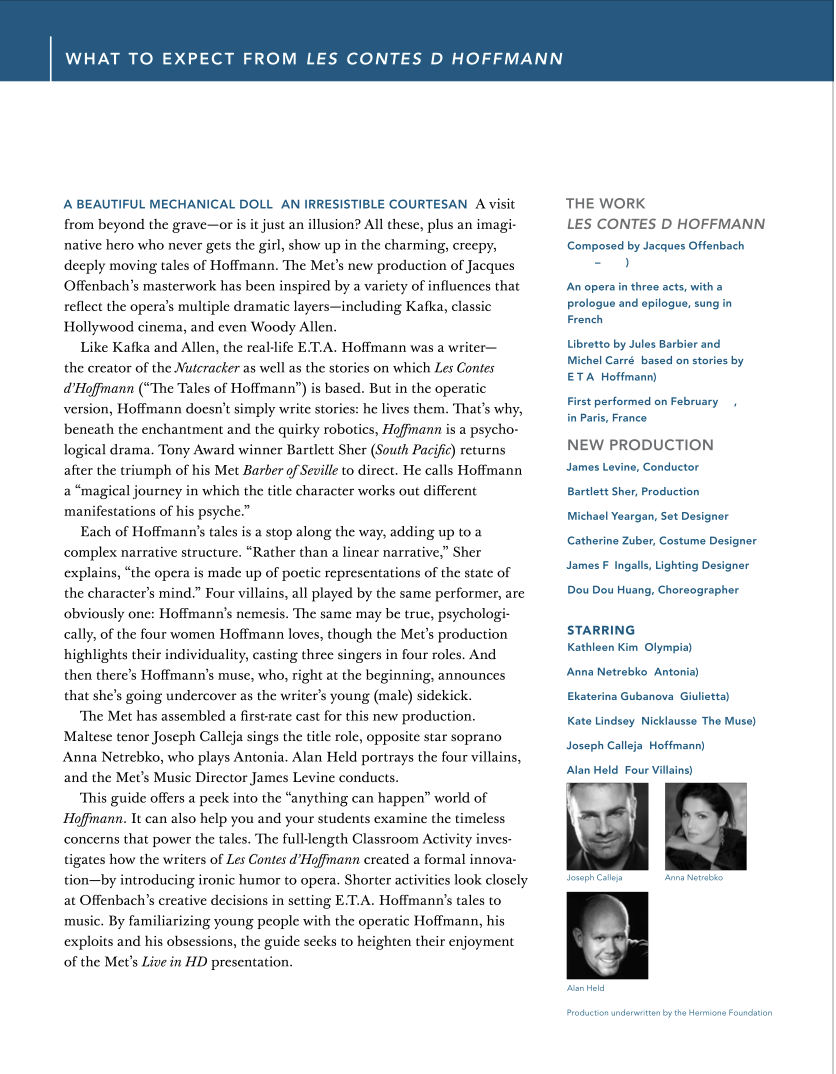
English Synopsis for Tales of Hoffmann
Libretto
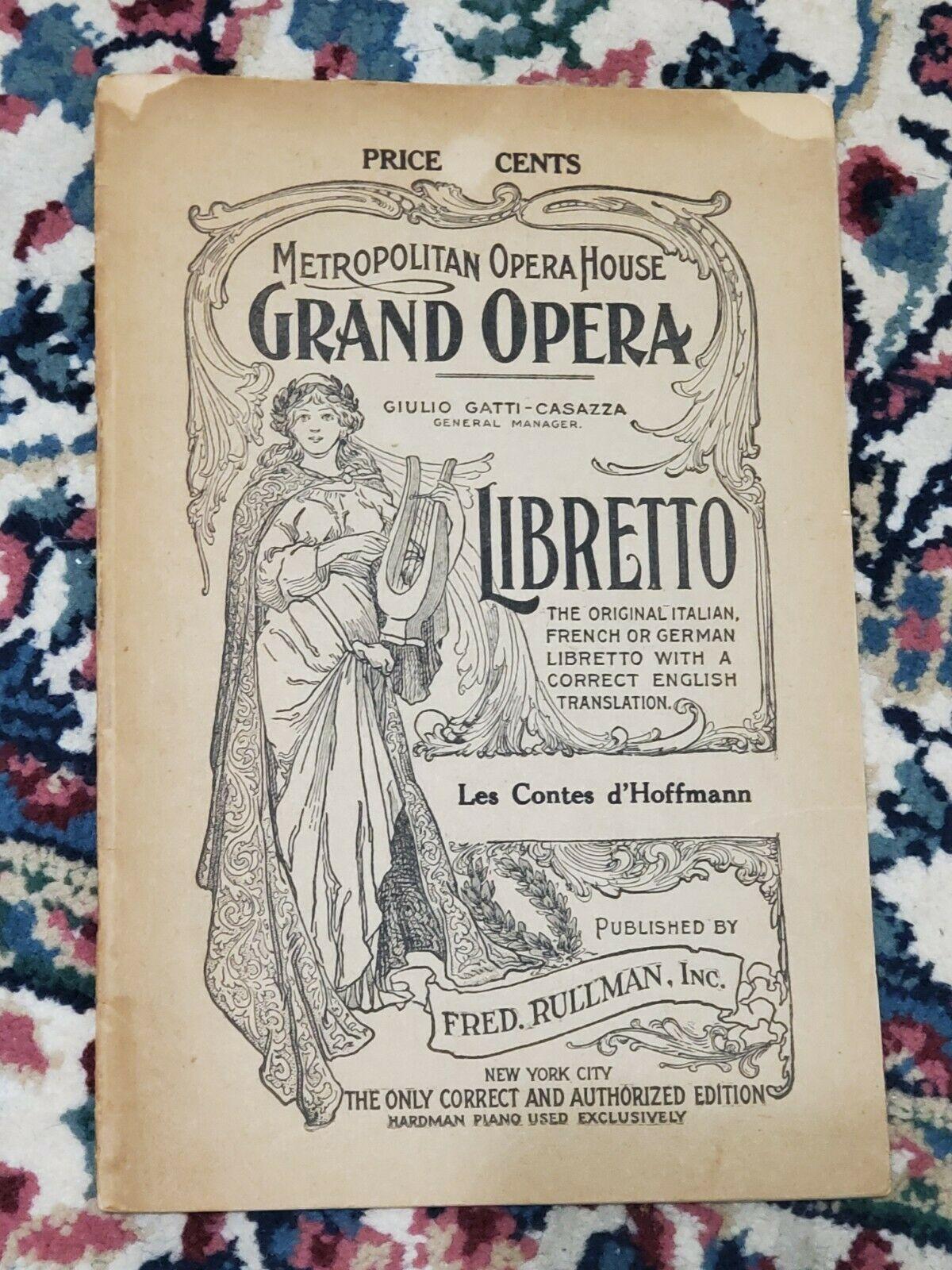
English libretto for Tales of Hoffmann
A great director's homage to a great cinema/opera/ballet achievement.
Martin Scorcese discussing his admiration for Powell & Pressburger as a writer/director team and the excellence of their "Tales of Hoffmann." Scorcese considers the Archers (Powell & Pressburger) as a key influence on his cinematic journey. So much so that he funded and oversaw the restoration of several of their films. Thank you, Marty!
Zombie movie director George Romero discusses Tales of HOffmann.
Horror movie director George Romero shares his love for the Powell/Pressburger film version of Tales of Hoffmann.
Opera Monte Cristo, Nov 15, 2022
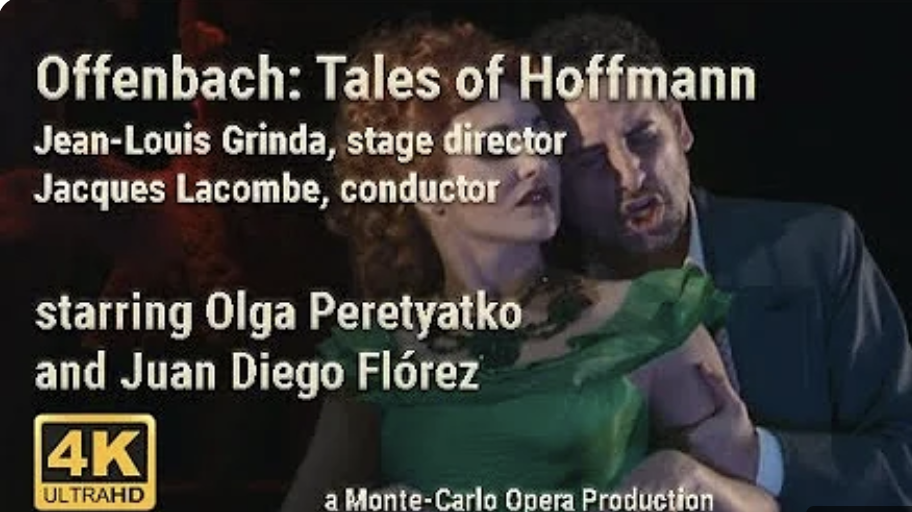
Opera Monte Carlo production. This is a rare production because all four heroine roles are performed by the same soprano. In this production Olga Peretyatko sings Stella, Olympia, Antonia and Giulietta. Normally, Olympia needs a coloratura soprano, Antonia a lyric soprano, and Giuletta, a dramantic soprano.
Metropolitan Opera, Jan 31, 2015
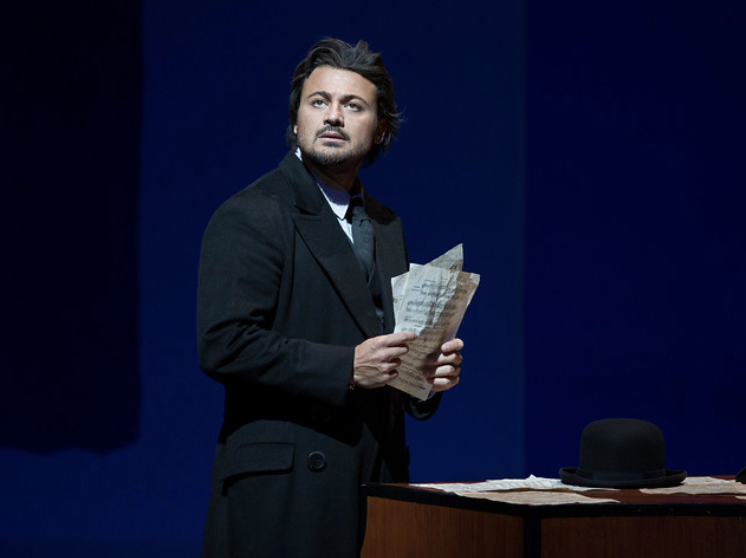
The 2015 Metropolitan Opera revival of the Bartlett Sher staging of "Les Contes d'Hoffmann" featuring Vittorio Grigolo as Hoffmann, Thomas Hampson as the four villians, Erin Morley as Olympia, Hibla Gerzmava as Antonia, Christine Rice as Giulietta, and Kate Lindsey as Nicklausse. English subtitles are available via the YouTube controls. Kate Lindsey has a powerful stage presence and significantly augments any production she is in.
This version is probably the best traditional version of this opera.
College of Charlston Opera, Feb 26, 2023
An exceptional very accessible college production. Fresh, young singers with an abundance of energy and enthusiasm. Strong proof that the art form is alive and well!
Olympia's Doll Song - Patricia
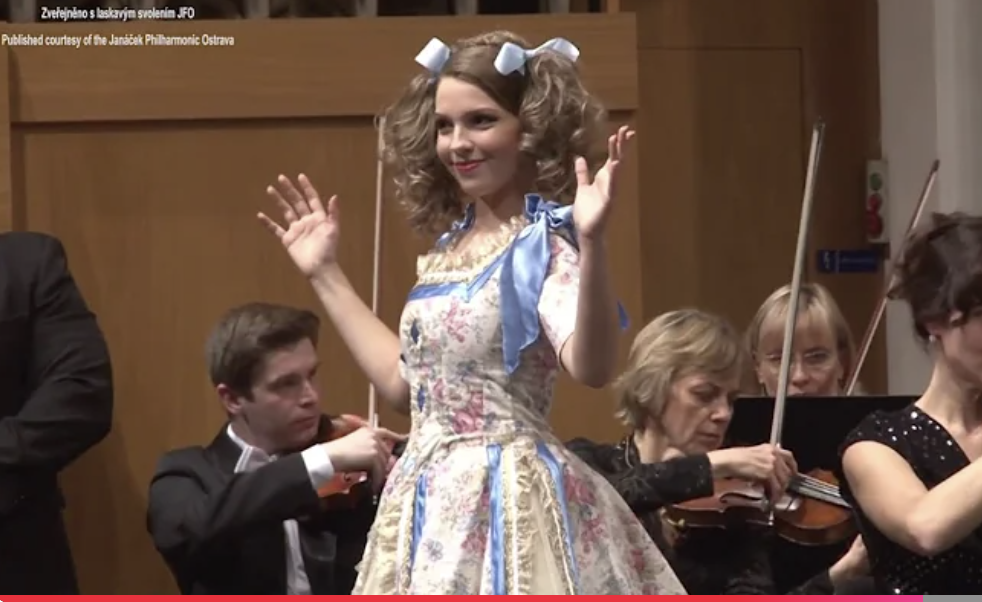
The young and charming Patricia Janeckova sings "The Doll Song" from the Olympia section of Hoffmann. Sadly, Patricia died at 25 years of age in 2023 from breast cancer.
If you view this clip, Youtube will tempt you with many other versions of The Doll aria.
Olympia's Doll Song - Sabine
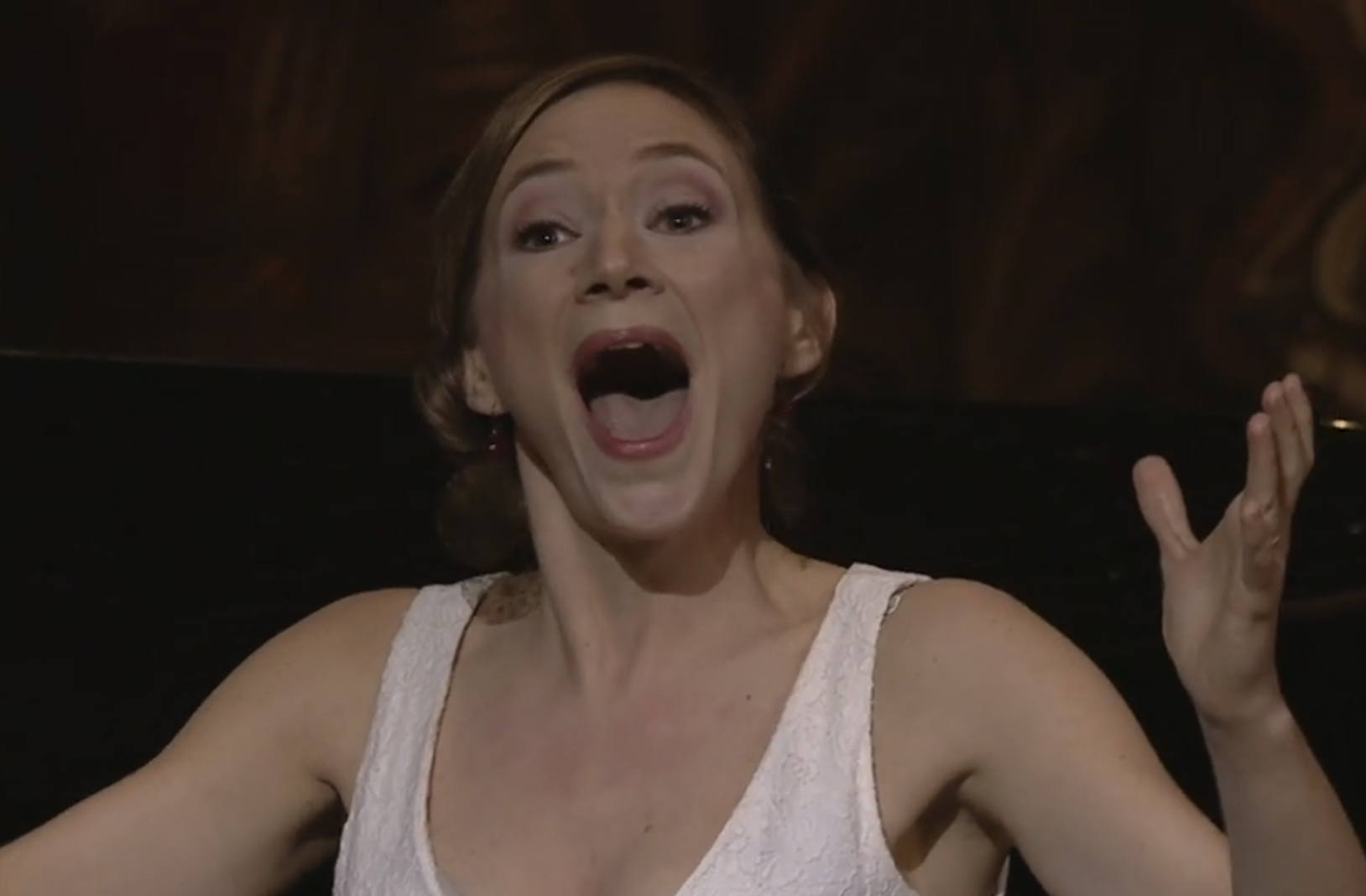
France's reigning coloratura soprano, Sabine Devieilhe, singing "Les oiseaux dans la charmille." Note the ornamentations that she adds to this challenging aria.
Other favorite versions are by Natalie Dessay and Joan Sutherland. But the clip below may be the most remarkable of all.
Future of Opera Performance?
Olympia's Doll Song - Serena
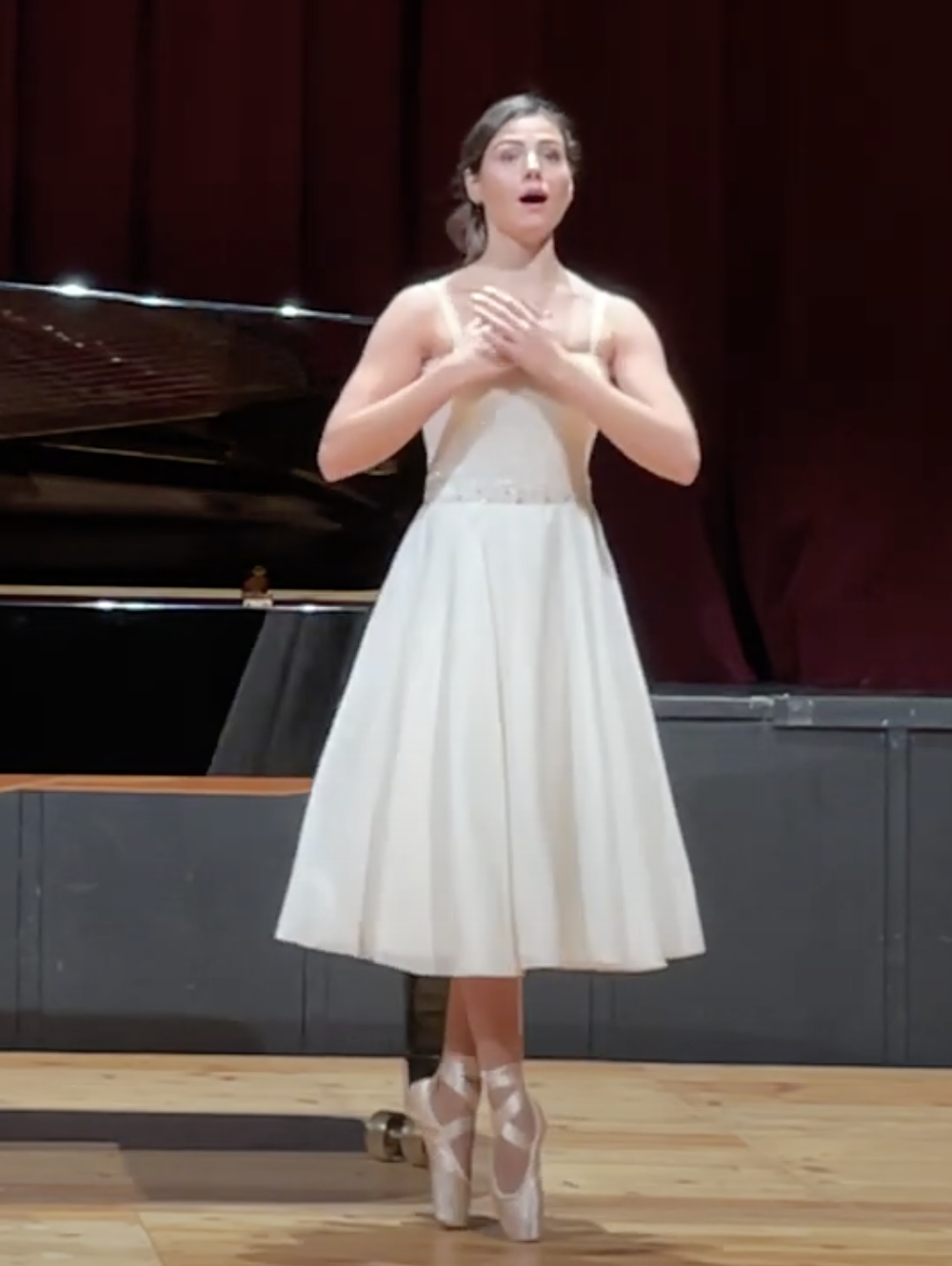
Serena Sáenz sings and dances The Doll Song. Many very fine sopranos have sung Olympia and pantomimed doll-like movements. Moira Shearer danced but lip-synched the role. Ms. Sáenz achieves something not seen or heard before. Broadway stars have been "triple threats" for nearly a century. Why not in opera?
Ms. Sáenz has studied dance as well as voice. She has chosen voice as her career and has sung numerous roles. There are several aria roles on Youtube to enjoy. In 2022 she sang Queen of the Night at the Opera Barcelona under Dudamel's baton.
Barcarolle
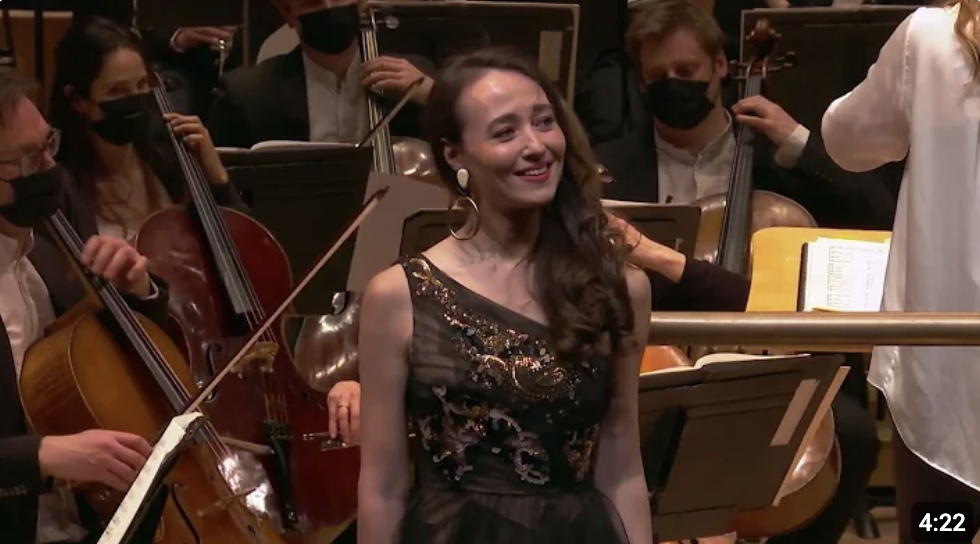
Barbara Hannigan and Fleur Barron and the London Symphony Orchestra serve up a lovely version of Hoffmann's Barcarolle from the Guilietta scene.
Life is Beautiful - Barcarolle montage
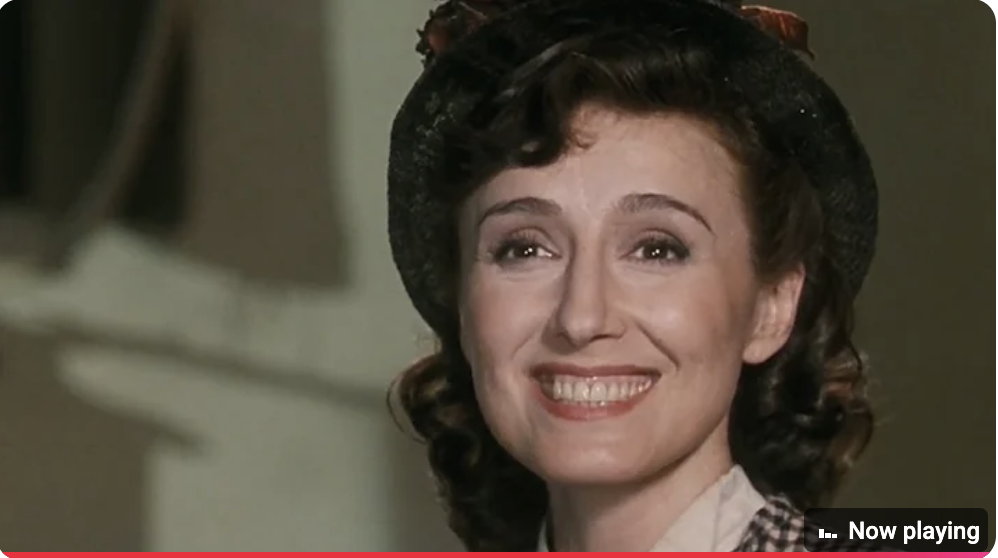
This is just for fun. Here is a montage from Roberto Benigni's 1997 film, "Life is Beautiful" set to Offenbach's Barcarolle.