
Don Giovanni
Mozart's final and most revered opera, premiered in Prague on October 29, 1787. "Don Giovanni" was commissioned by the Prague Italian Opera after the great success there of his prior opera, "Le Nozze di Figaro". Mozart was eager to create and premiere this new opera in Prague after the mediocre reception in Viennna of "Le Nozze" (only 19 performances). Da Ponte's libretto is based on the Spanish playwright, Tirso de Molina's 1630 play "El burlador de Sevilla y convidado de piedra" ("The Trickster of Seville and the stone guest").
The trickster of whom this opera tells the story is Don Juan the infamous seducer. In the opera we meet three of his intended or actual victims, Donna Anna, Donna Elvira and Zerlina. These are just three of the 2065 conquests documented in the "Catalogue Aria" by the servant, Leporello. We also meet the Commendatore, Donna Anna's father who is killed by Don Giovanni in the first scene of the opera, and who returns for revenge in the last scene. That final scene is unique for it's three deep male vocal roles -- Don Giovanni is a baritone, Leporello is a bass and the Commendatore is most stunningly portrayed as a basso profundo. It is in this final scene that Don Giovanni is cast into hell to suffer divine retribution for his life of sin.
False history
In the Milos Forman film, "Amadeus," it is inferred that a vengeful Salieri commissioned the opera in an attempt to hasten the already ill Mozart's early death. Whereas that is an entertaining premise it remains a fiction since we know that the commission was from the opera house now known as the "Estate Theatre".
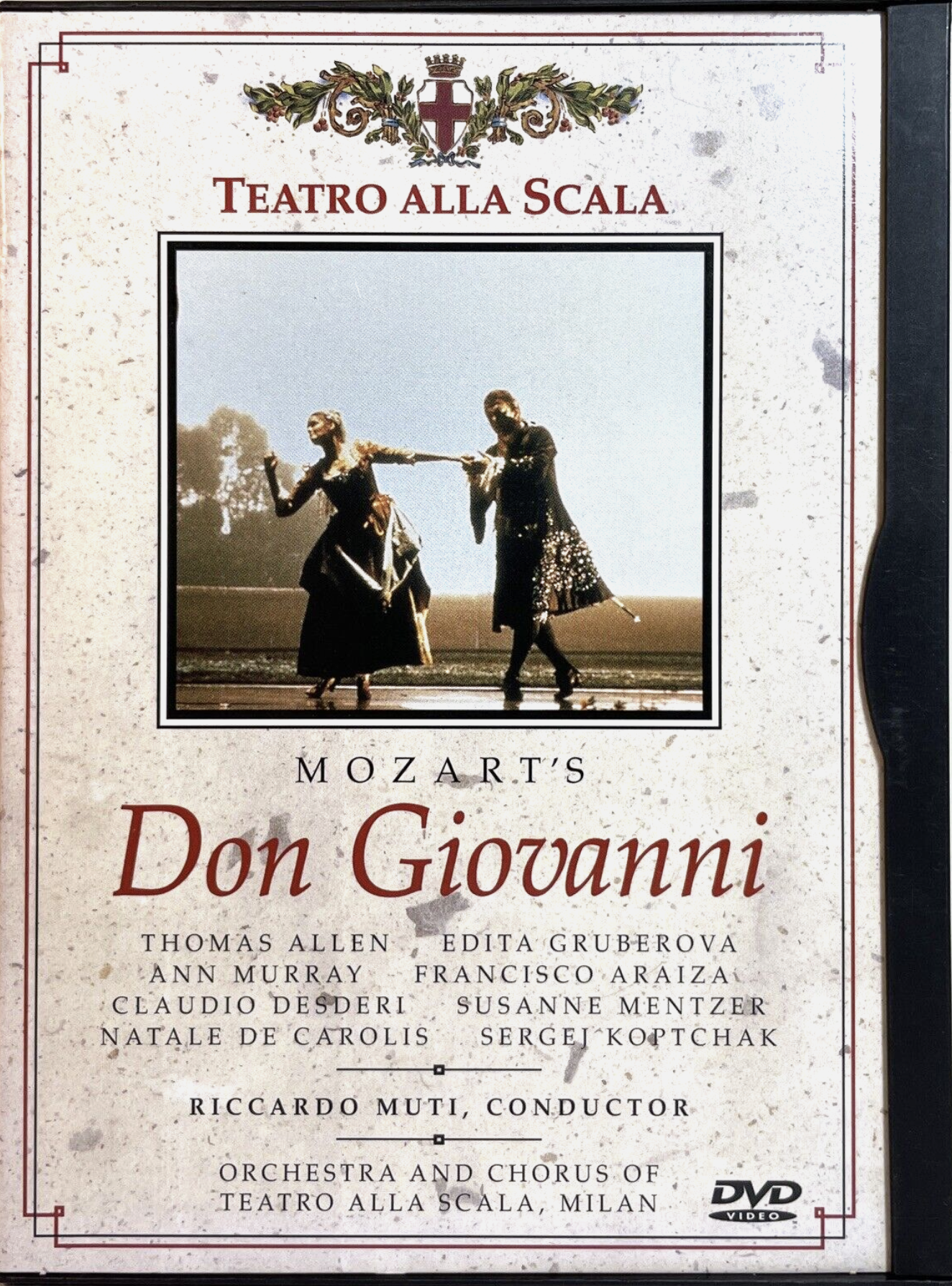
Our production is from a 1989 performance in La Scala in Milan, Italy.
Synopsis
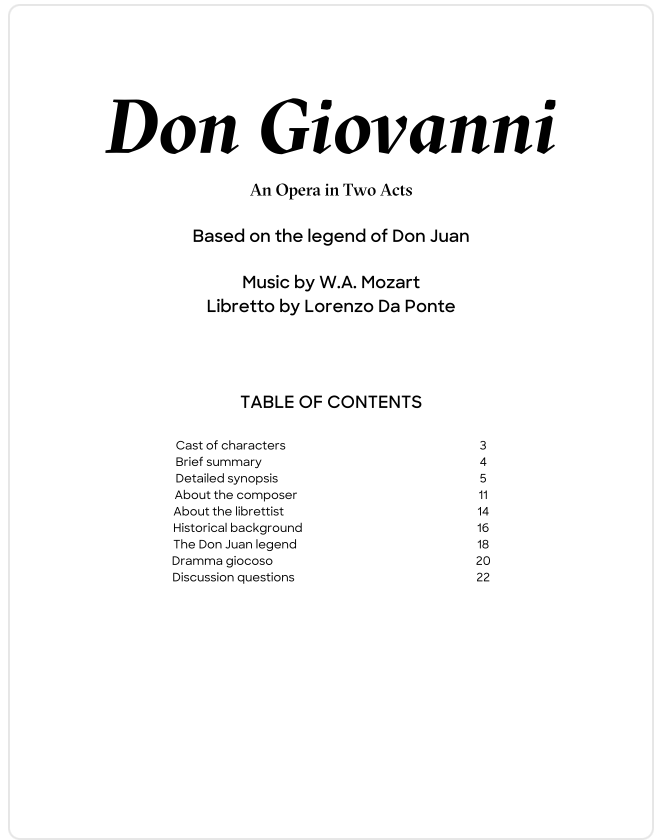
Synopsis and much additional background information for Mozart's "Don Giovanni".
Libretto
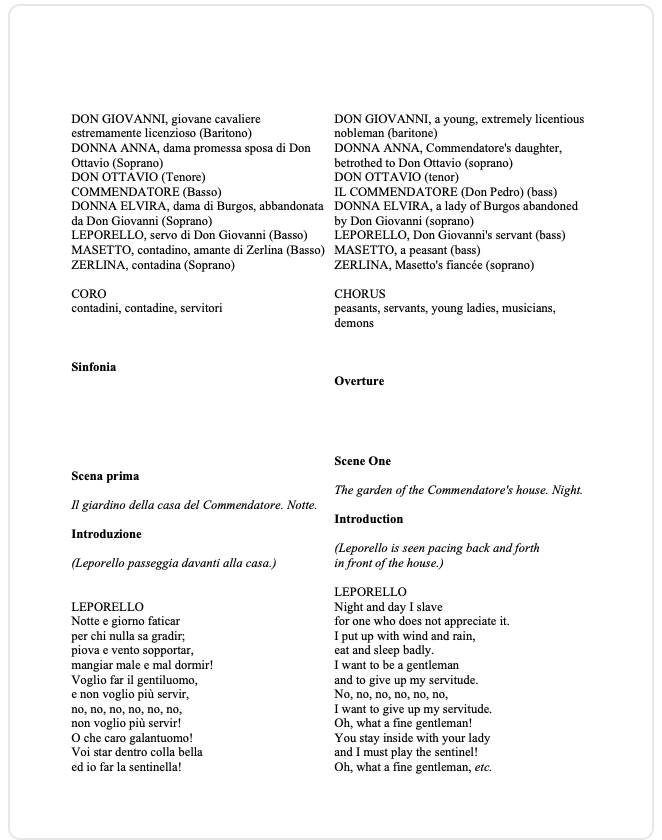
English / Italian libretto for "Don Giovanni".