
Dido and Aeneas
Dido and Aeneas was the first opera written in English by Henry Purcell in 1689. This was a commission from the Josias Priest Girls School in London. The libretto was by Nahum Tate, an Irish-Anglo poet. Tate (née Teate) based the libretto on Virgil's (70BC - 19BC) epic 10,000 line poem, The Aeneid, which recounts Aeneas' wanderings from Troy to Italy. From the title we know that there are two main characters: Dido, Queen of Carthage, and Aeneas, surivivor of the Trojan war and alleged founder of Rome.
Aneias is the son of the Trojan prince Anchises and the goddess Aphrodite. He was also nephew to King Priam of Troy and cousin to Hector, one of the greatest warriors of the Iliad. He is primarily known for bringing Trojan culture to Rome as a rebirth of Troy. Troy was a city-state located on the western edge of what is now Turkey that was a center of power in antiquity. It lies east of Athens across the Aegean Sea. Troy fell to Greece in the 12th century BC. The Aeneids - Aeneas' entourage - founded Lavinium (a small settlement 6 km south of the site of Rome) in the 12th century BC. Much later Romulus continues the story by founding Rome. Julius Caesar commissioned Virgil to write the Aeneid to create the origin myth of Roman culture.
Dido is the queen of Carthage. She is the daughter of Malgernus, King of Tyre. (Tyre is a port city 80 km - 50 miles - south of Beirut. It was a prosperous city due to it's two ports, a northern port called the Sidonian port, and a southern port called the Egyptian port. The city and outlying lands also benefited from an abundance of fresh water from natural springs. Dido was married to Acerbus, a wealthy merchant and her maternal uncle who was next in line to be king. King Malgernus dies and Dido's younger brother Pygmalion (no relation to Ovid's Metamorphoses character who insired George Bernard Shaw's play) slew Acerbus and sought to take control of Tyre. In a daring escape, Dido loaded Acerbus's hidden wealth on ships and fled to Cyprus with her many followers. From there, with even more followers they set off for Northern Africa, settling in what is now Tunisia and founded the city of Carthage. Pygmalion, on advice from the Gods, declined to pursue her.
But her troubles were not over. Upon disembarkment, Dido bought land from prior Tyre expats in nearby Utica to found Carthage. Carthage prospered and she was beloved by her followers, now not only for her beauty but also for her business and leadership acumen. Both did not go unnoticed by the adjacent Numidian moor King Iarbas. He had a powerful kingdom in Lybia, east of Carthage. He proposed to help grow Carthage into a powerful city on the price of Dido becoming his wife. Dido was torn between her ongoing grieving for Acerbus and her duty to her people to help Carthage prosper. She requested several months to allow her grieving to come to an end. King Iarbas consented. In the meantime, Aeneas and his fleet wash up on Carthage's shores. Aeneas and his army repulse King Iarbas. Dido and Aeneas fall in love and Dido begins to neglect her leadership duties. Aeneas is reminded of his duty to found Rome and his ships leave for Italy. Dido is heartbroken. She commands a pyre built to burn Aeneas's belongings left behind. As it burns, she ascends the pyre and impales herself on Aeneas' sword. She knows that Aeneas can see the smoke from the pyre and that he will know that she has sacrificed herself.
Her sacrifice underscores her curse on Rome. As she dies she foresees that in the future Hannibal will wreak havoc upon Rome in the second Punic war.
Our Showing
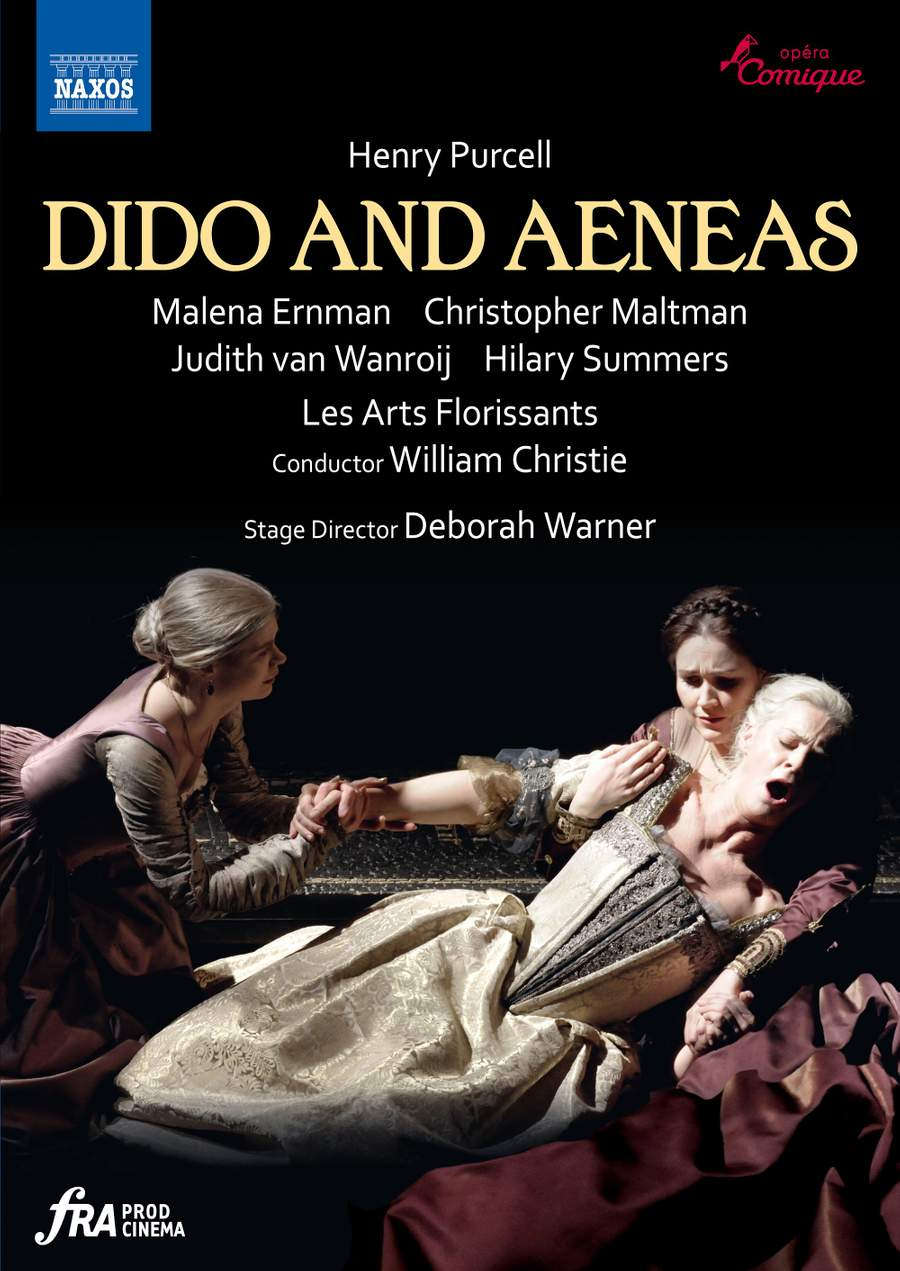
Henry Purcell's opera of the Virgil myth of Dido and Aeneas. 2008 production at the Opera Comique in Paris. Here is a explanatory video by Opera Anna. She is a working soprano with a generous, informative and slightly irreverent soul.
Pre-Opera Lecture video
Pre-Opera lecture to provide background on Purcell's "Dido and Aeneas". Topics include:
- Brief introduction to Henry Purcell
- An immersion into the sound world of Purcell's baroque chamber opera.
- Photos of the main characters
- A synopsis of the opera
- Geography refresher on where the important locations are
- Curation of mythology information for further study
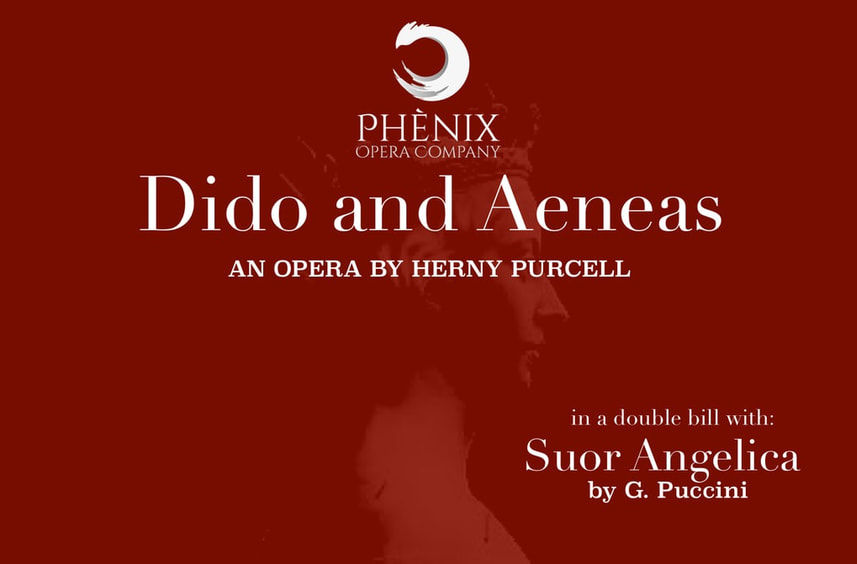
Henry Purcell's opera of the Virgil myth of Dido and Aeneas by the San Francisco based, Phènix Opera Company.
Libretto
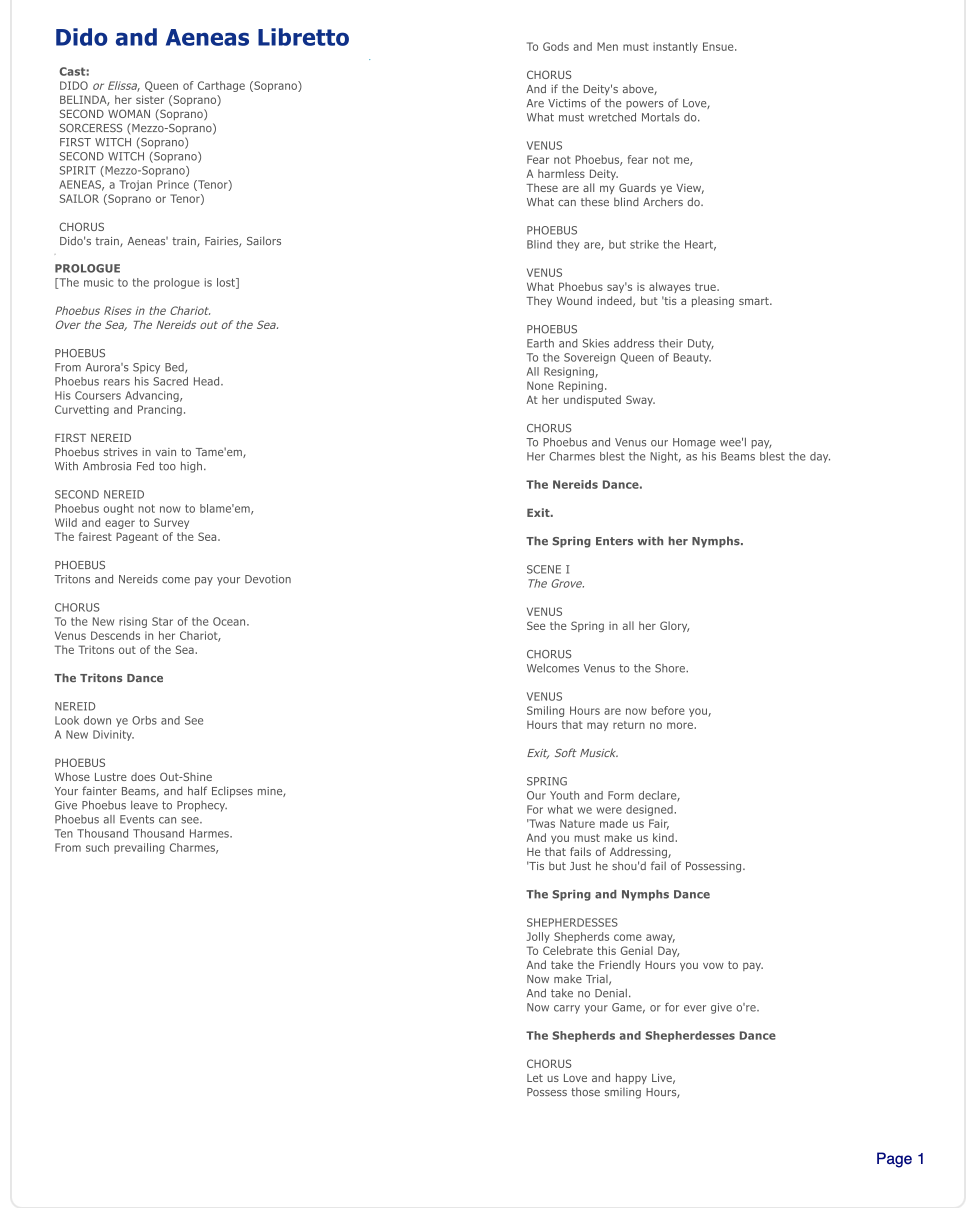
English language libretto. A scant 4 and a half pages of text.
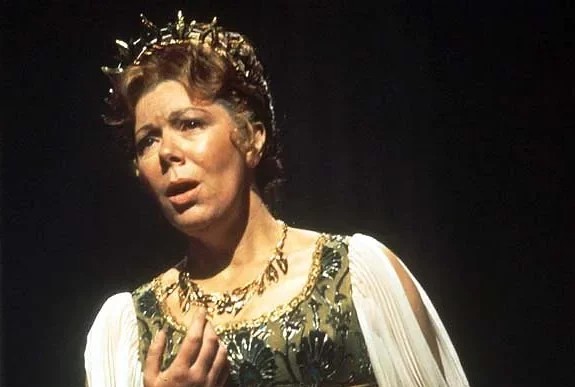
Janet Baker performing "Dido's Lament" in 1966 at Glyndebourne.

Joyce DiDonato sings Dido's Lament. Includes English sub-titles.